Planetary Geoscience With Nuclear Instruments and Modeling

Our group designs, builds and flies nuclear instruments to map hydration, elemental compositions, and decode planetary geology.

this is a real prompt — type help and press Enter · there are particles in the walls

About

Pixel-art banner: lunar and Martian rover scenes with API PNG bench and neutron/gamma beams

Our group builds and operates neutron & gamma-ray spectrometers for planetary exploration and terrestrial applications. We lead instrument development, calibration, Monte Carlo modeling, and science analysis for missions including LunaH-Map, Lunar-VISE, MSL Curiosity (DAN), and Mars 2020 Mastcam-Z. We collaborate with national labs and industry on active neutron techniques, including Associated Particle Imaging (API). Planetary geologists by training, we bring a geology-driven lens to nuclear-instrument design and implementation. Our group uses this scientific expertise to lead the US science data analysis of neutron data from the Mars Science Laboratory Curiosity rover.

Institution
Arizona State University — School of Earth & Space Exploration

Location
ISTB4, Tempe, AZ

Active Missions
Lunar-VISE (Co-I & Instrument Scientist), Curiosity (Participating Scientist), Mastcam-Z (Co-I), LunaH-Map (PI), BepiColombo (Co-I), LHANS (Deputy PI)

Connect
Email · LunaH-Map

Recent Highlights

  • Apr 15, 2026
    Flight Lunar-VISE GRNS is currently in thermal-vacuum (TVAC) testing at ASU — a key milestone ahead of delivery.
  • Apr 13, 2026
    Jack Lightholder successfully defends his PhD dissertation, "Methods and Applications of Active Neutron Spectroscopy — Accelerating Subsurface Science".
  • Apr 13, 2026
    Czarnecki, Hardgrove, Rampe & Gasda (2026) on constraining clay mineral hydration and amorphous phase abundances in Gale Crater accepted in JGR: Planets. See publications.
  • Apr 9, 2026
    Victoria Concepcion passes her MS defense: "Playing Hide and Seek with Martian Water: The Effects of Diagenetic Alteration on the Preservation of Hydration and Organics in the Clay-Sulfate Transition Zone".
  • Mar 14, 2026
    Gasda et al. (2026) on metal enrichments in the Amapari Marker Band, with group coauthors Lightholder and Hardgrove, accepted in JGR: Planets.

Instruments

Selected instruments we’ve developed or are developing. Images below are placeholders—click through for papers and technical details.

SINGR detector and voltage divider hardware

SINGR — Single Scintillator Neutron & Gamma-Ray Spectrometer

NASA PICASSO (2015). Developed and demonstrated in partnership with NASA Goddard Space Flight Center. Single-scintillator active neutron instrument concept for coincident neutron/gamma detection and compact planetary payloads. SINGR can be used with a pulsed neutron generator (PNG) to quantify hydration and burial depth. More details can be found Dr. Heffern's publication.

LunaH-Map Miniature Neutron Spectrometer

LunaH-Map Miniature Neutron Spectrometer

Built for the Lunar Polar Hydrogen Mapper (LunaH-Map) mission. Launched on SLS (Nov 2022); the Mini-NS acquired hours of lunar neutron & gamma-ray data during a lunar flyby. See the IEEE paper for technical details.

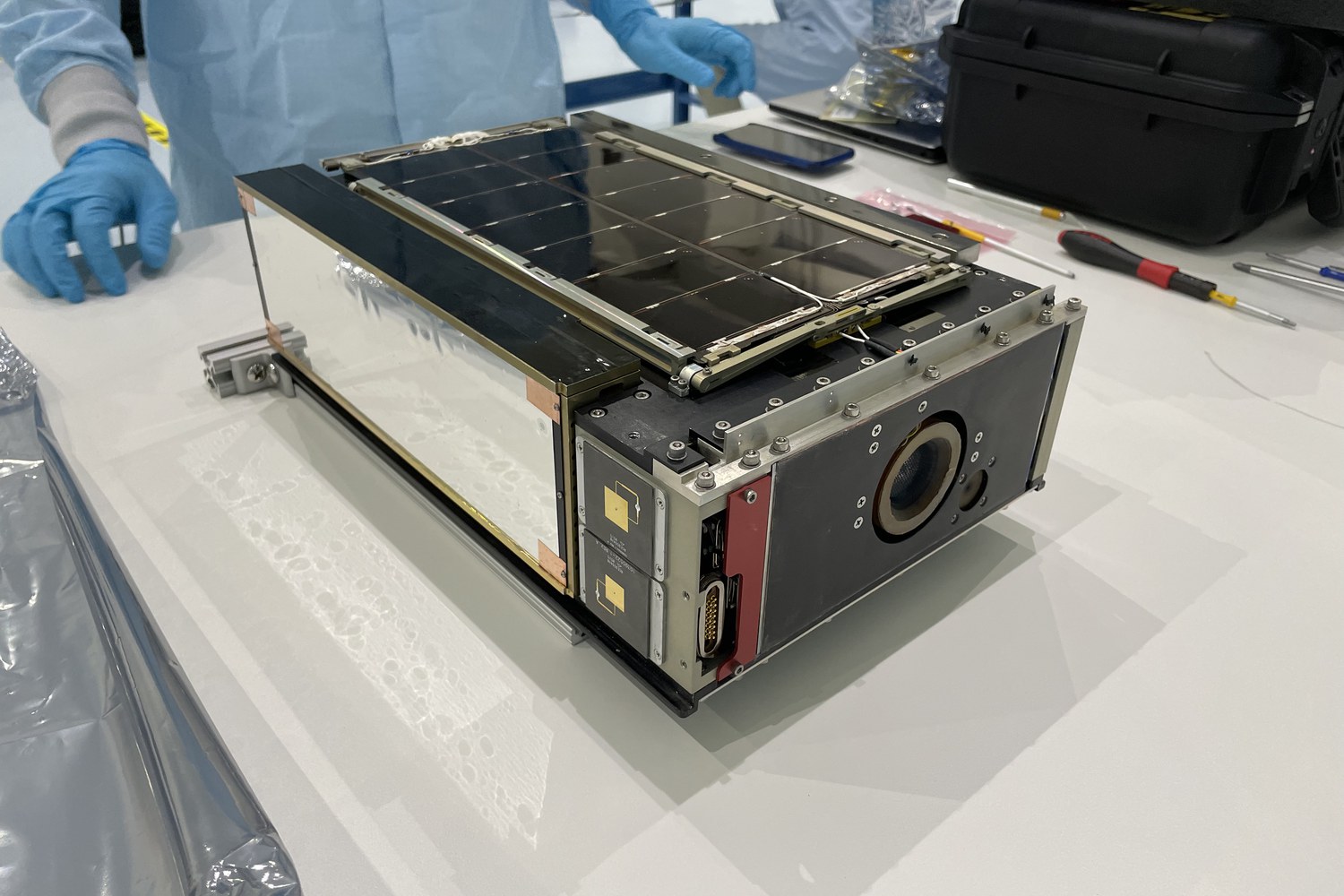
Lunar-VISE GRNS and Rover

Lunar-VISE Gamma-Ray & Neutron Spectrometer (LV-GRNS)

The Lunar-VISE GRNS uses LunaH-Map heritage with expanded capability to enable precise gamma-ray spectroscopy; optimized for K, Th, Fe measurements on the Lunar-VISE rover (launching 2028). Designed for improved elemental quantification and science traceability across the rover traverse.
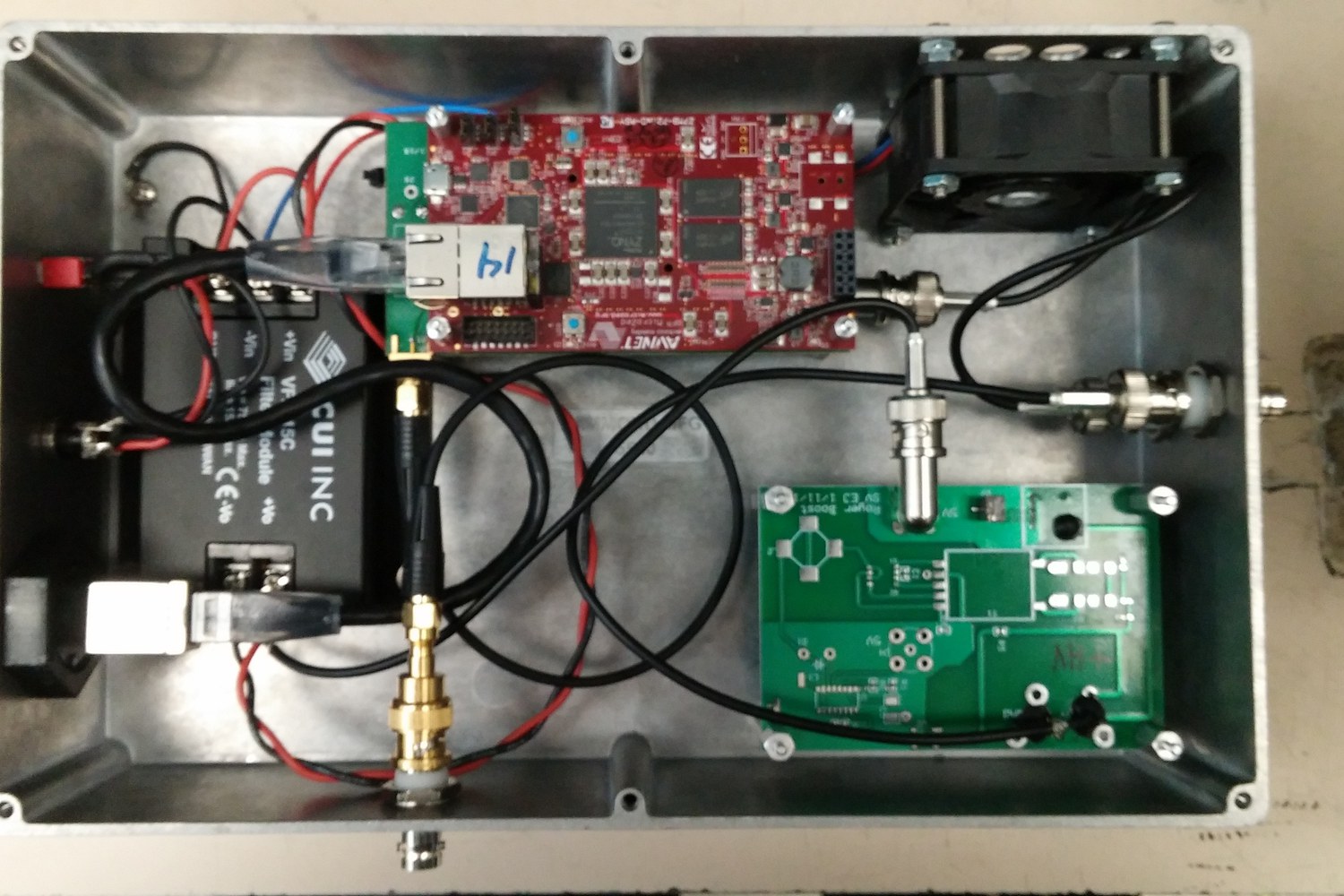
Field Portable neutron detector system

Field-Portable Neutron Detector System

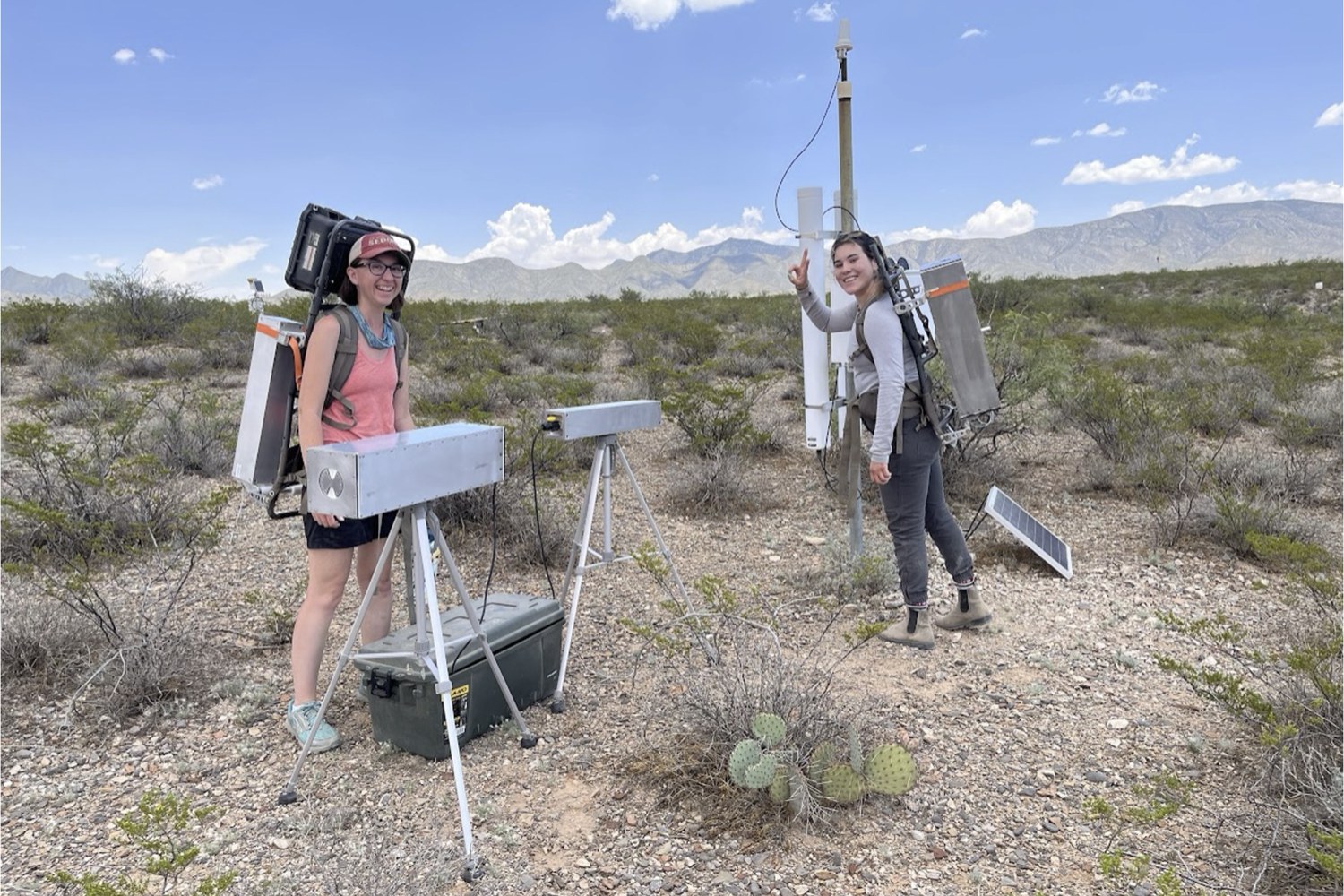
Portable terrestrial system for soil moisture/hydration measurements to ~1 m depth in analog environments. Supports field campaigns and calibration datasets for planetary missions; hydration and soil moisture measurements deployable with lightweight power and logging.

miniature grns for small spacecraft

Mini-GRNS (with JPL)

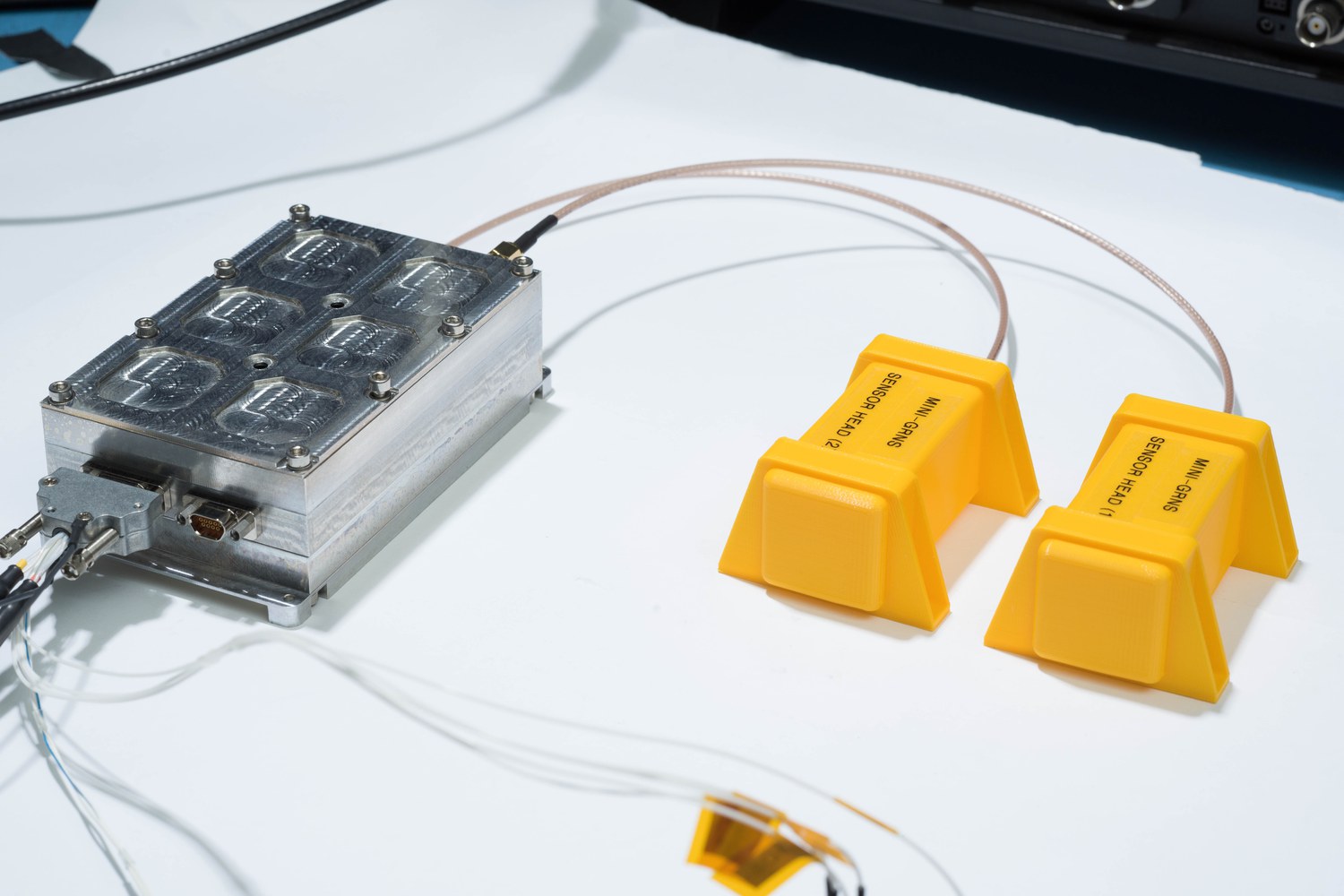
Joint development for potential accommodation on a future Mars helicopter mission. JPL leads electronics; ASU leads sensor head and science. A miniaturized gamma-ray/neutron package targeted for measuring hydration on a low-mass aerial platforms with constrained power/thermal envelopes.

Projects

Gamma-Ray & Neutron Spectrometer for the Lunar-VISE Rover Mission

We are leading the design and qualification of the Lunar-VISE Gamma-Ray and Neutron Spectrometer (GRNS) that will map hydrogen and key elements (K, Th, Fe) at the Moon's Gruithuisen Domes. The instrument uses LunaH-Map–derived heritage and the Lunar-VISE GRNS science team leads the calibration/Monte Carlo modeling, as well as science operations planning. Launch targeted for 2028.

Mars Curiosity Dynamic Albedo of Neutrons (DAN) & Orbital Context

DAN measures subsurface hydrogen along Curiosity’s traverse. We analyze DAN active/passive neutron data to quantify hydration and bulk neutron absorption, relate them to topography and geology, and integrate with orbital datasets (thermal inertia, spectroscopy) to constrain surface–subsurface processes at Gale Crater.

Analog Field Deployments

We take neutron spectroscopy into the field to test retrievals of soil moisture/hydration and to validate models. Recent and planned campaigns span diverse terrains—including an international season at the Gobabeb dunes (Namibia)— to assess geometry, roughness, and layering effects and to inform future missions (e.g., Dragonfly-relevant sensing).

API PNG Laboratory (ASU)

Our new Alpha-Particle-coincidence Pulsed Neutron Generator (API PNG) lab will support active neutron imaging, scattering, and capture-gamma experiments. We develop measurement techniques and calibrations for planetary, environmental, and materials applications, using CLYC/EJ-309 detectors and GEANT4/MCNP modeling to tie data to physics.

International & Industry Collaborations

We contribute to ESA’s BepiColombo science, continue instrument and data roles with Mastcam-Z and Curiosity, and co-develop applied neutron sensing with partners. Current work includes hydrogen quantification for LHANS— Canada’s first planetary microrover—collaborating with the Canadian Space Agency, Bubble Technologies, and Canadensys, with design and ops practices adapted from LunaH-Map/Lunar-VISE.

Lunar Polar Hydrogen Mapper (LunaH-Map) Data Analysis

LunaH-Map is a CubeSat mission that launched in November 2022, carrying a pioneering miniaturized neutron and gamma-ray spectrometer. The spacecraft successfully collected several hours of flyby data at the Moon, demonstrating a new class of planetary nuclear instrumentation. Our group leads the analysis of these data, focusing on hydration and elemental mapping of the lunar surface and polar regions.

Photos

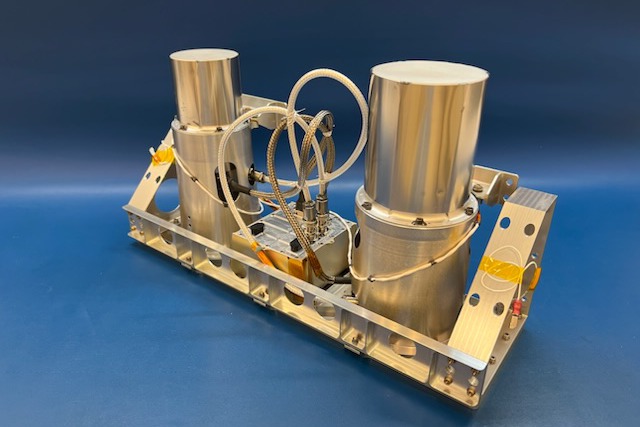
Apr 2026Lunar-VISE flight GRNS in the cleanroom during TVAC at ASU.
Oct 2025Cosmic-ray neutron sensor deployment, Namib Desert, Namibia — Mars dune analog.
Aug 2025Cosmic-ray neutron sensor deployment, Alvord Playa, Oregon.
Aug 2023Feldman Symposium on planetary nuclear spectroscopy.
Nov 2022LunaH-Map Mini-NS PSD vs Energy across flyby acquisition periods.
Nov 2022Artemis I / SLS launch from Kennedy Space Center, carrying LunaH-Map.
Sep 2022At KSC for the Artemis I launch attempt (scrubbed).
Jul 2021LunaH-Map spacecraft delivery to NASA Kennedy Space Center.

Current Group Members

Craig Hardgrove, PhD — Associate Professor

PI, LunaH-Map · Co-I & Instrument Scientist, Lunar-VISE · Participating Scientist, MSL Curiosity

chardgro@asu.edu


Current roles: Associate Professor (ASU SESE), Director of Projects (ASU NewSpace), Barrett Honors Faculty.

Past roles: Postdoc (ASU/SBU), Assistant Staff Scientist (MSSS).

Angelica Berner

PhD student, ASU

Active neutron die-away modeling in complex geometries (walls, multi-walls, cave-like). Using MCNP6, shows that local relief shifts peak timing/magnitude and can produce late-time secondary peaks—implications for retrievals and for sensing surfaces beyond the nominal footprint.

Mohini Jodhpurkar

PhD student, ASU

Investigates lunar hydrogen anomalies around Mons Mouton using LOLA/WAC/Diviner, NAC/ShadowCam, and LP/LRO neutron datasets. Maps micro-PSRs and crater depth–diameter to test whether Nobile’s PSRs supply volatile-rich materials—relevant to Artemis III science and ISRU targeting.

Deniz Ölçek

Researcher (UiO-CENSSS / EIDEL / ASU collaborator)

Active neutron imaging technologies for in-situ hydrogen detection and geochemical mapping at centimeter scales. API-based fast-neutron imaging with D–T generators and dual neutron/gamma detectors such as CLYC, combined with GEANT4 modeling, to achieve depth-resolved 3D regolith imaging and identification of hydrogen-rich regions. Lunar-VISE analog studies.


Researcher / Space Systems Engineer

Alumni

Publications

    Teaching

    Code & Data

    Group code & data

    Lunar-VISE and LunaH-Map analysis tools, calibration scripts, and Monte Carlo inputs.

    DAN data & tools

    MSL Curiosity Dynamic Albedo of Neutrons (DAN) retrievals, analysis code, and archived datasets.

    Open Positions

    THERE ARE NO CURRENT OPENINGS
    Check back soon. Our group typically welcomes PhD students, postdocs, and undergrads interested in neutron/gamma spectroscopy, instrument calibration, with Mars, lunar & terrestrial applications.

    • Strong physics/engineering background
    • Experience with Python and Monte Carlo (MCNP/Geant4)
    • Interest in hardware + analysis, teamwork, and field ops

    How to apply: Email a 1-page statement + CV to chardgro@asu.edu.

    Contact

    Email: chardgro@asu.edu
    Phone: (480) 727-2170
    Address: ISTB4, Arizona State University, Tempe, AZ

    Follow: LunaH-Map

    Partners

    NASA ASU SESE